In partnership with the British Library, this event brought together a panel of experts discussing all things fairy tale, inspired by the Library’s current Fairy Tales exhibition and accompanying book.
The panel consisted of Georgia Leighton, author of the Sunday Times bestseller Spellbound; Sam Davey, prize-winning author or The Chosen Queen; and Dr Ceri Houlbrook, researcher in folklore and history at the University of Hertfordshire. It was chaired by Co-Curator of the British Library’s Fairy Tales exhibition, Alison Bailey.
The discussion started with Bailey asking the panel how they came to love fairy tales, and all three gave a very similar answer: fairy tales were the first things they read as children and so they fell in love with them very early in life. The panel also agreed that many children will harbour this experience, and in this way fairy tales are foundational when it comes to literature.
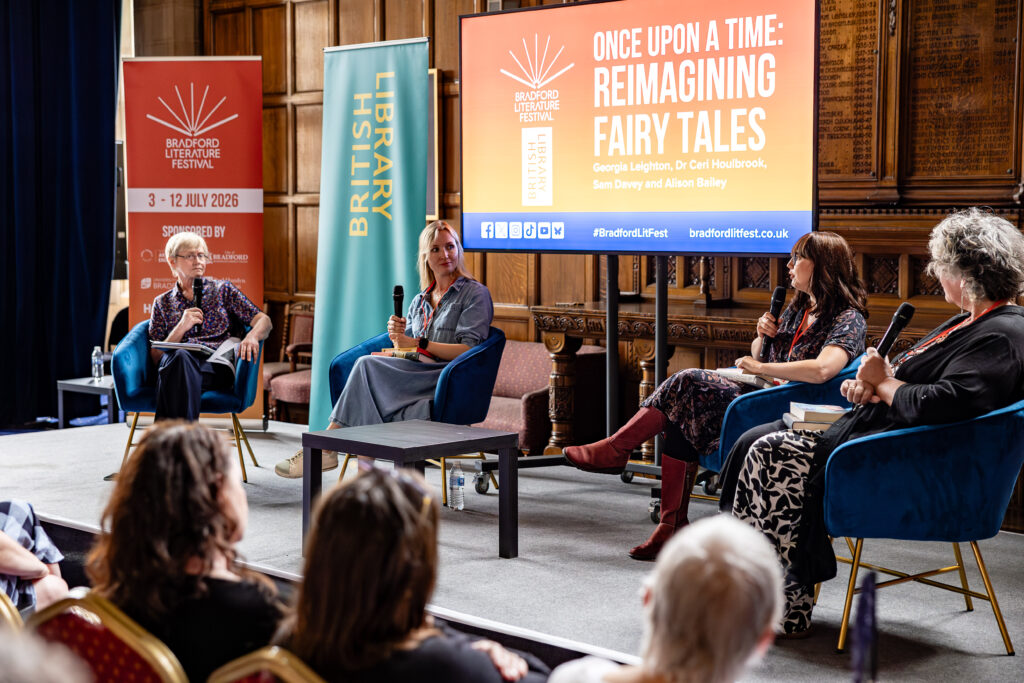
Bailey then asked a very difficult question, which brought laughs from the panellists and audience alike: “what is a fairy tale?”
Again, the panel were very much in agreement with the idea that it’s difficult to define exactly what a fairy tale is. Leighton said, “There’s a large overlap between fairy tales and folklore, however this in itself presents even more difficulties as the definition of folklore changes with time, and with different people’s understanding of it.”
Davey agreed and added: “One thing that can be said for certain is that there is one main difference between fairy tales and folklore: folklore could have really happened.”
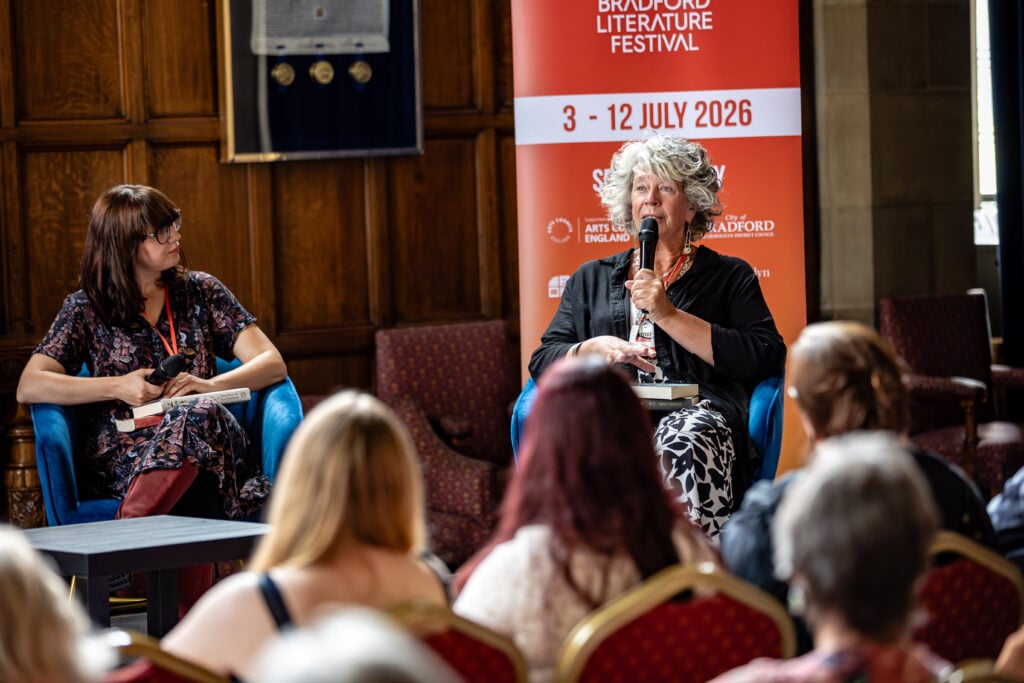
The panel then moved on to discuss why they decided to retell some classic fairytales. Davey said, “One reason is that retelling gives more agency and more voice to women; in a lot of fairy tales women are passive and often the victim of the events of the story.” Dr Houlbrook agreed, saying, “fairy tales are often as dark, if not darker, than Greek mythology, but this is often glossed over.”
The authors said they also wanted to challenge stereotypes. Leighton said, “Female characters in fairy tales that have agency are often witches, hags, or evil old women.” The authors were in agreement that they didn’t like that female characters are unfairly maligned and wanted to change that.
The history of fairy tales and folklore was then discussed, with a particular focus on gender. Dr Houlbrook said, “When The Folklore Society was founded in 1878, women were not only allowed but indeed encouraged to collect and catalogue folklore tales. There were many women who did so but, unfortunately, they didn’t receive any plaudits at the time, and their work was often taken and claimed by men who put their names on the books the women had written.”
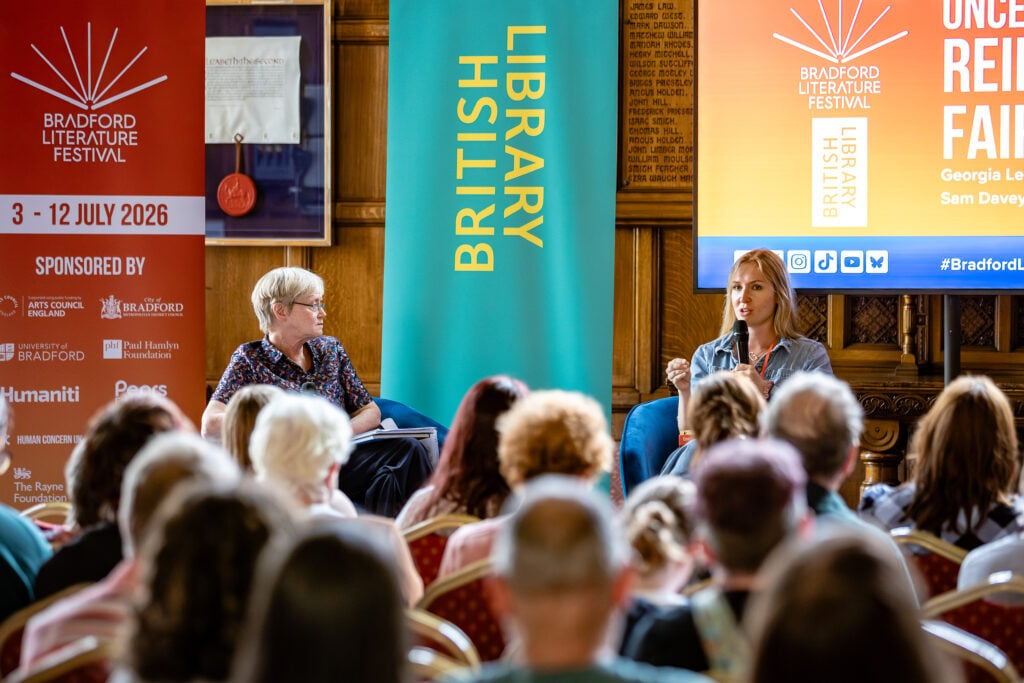
The panel then discussed the importance of place, exploring how evocative it can be and how much it can add to fairy tales and retellings of them. They also discussed how it can impact the characters and influence them within the story. The discussion referenced the earlier talk about real vs invented; Dr Houlbrook gave the example of a place they knew well as a child called Giant’s Tooth: “When I asked my mum why it was called that, she told me it was an entirely invented name because the place, to one person, resembled a giant’s tooth.”
The audience sat enraptured for the discussion and asked a lot of great questions once the panel discussion finished and the floor was opened up. The afternoon was yet another fantastic discussion in a series of wonderful events that Bradford Literature Festival is proud to host in partnership with the British Library.
The British Library Book of Fairy Tales is available to purchase from Waterstones now: https://www.waterstones.com/book/the-british-library-book-of-fairy-tales/the-british-library/freya-hartas/9781444983753