Bradford Literature Festival drew to a close this weekend, having welcomed a record 201,674 visitors across ten days of eclectic and inclusive cultural programming, with sold-out events and audiences from across the UK and internationally. With 762 events in total across their main festival programme, the education programme and their family events, the 2026 edition reinforced the festival’s reputation for challenging discussions from a balanced, historical perspective, building bridges across communities, and shaping national conversations around culture.
Commenting on the 2026 festival, Founder and Artistic Director Syima Aslam said: “Culture is not a luxury. It is a necessity. Bradford Literature Festival began with a simple idea: that a literature festival in this city should be more than a series of events. It should be a place of encounter. A place of ambition. A place where people who are too often spoken about could speak for themselves. A place where stories that had lived for generations in families, in communities, in music, in poetry, in memory, and in silence, could be brought into the centre of cultural life. We are very purposefully a literature festival, even though our programme is across arts, music, theatre, film and visual art. We are a literature festival because literature is language, imagination, memory, argument, beauty and truth. Literature is how we understand ourselves, and how we begin to understand each other.”
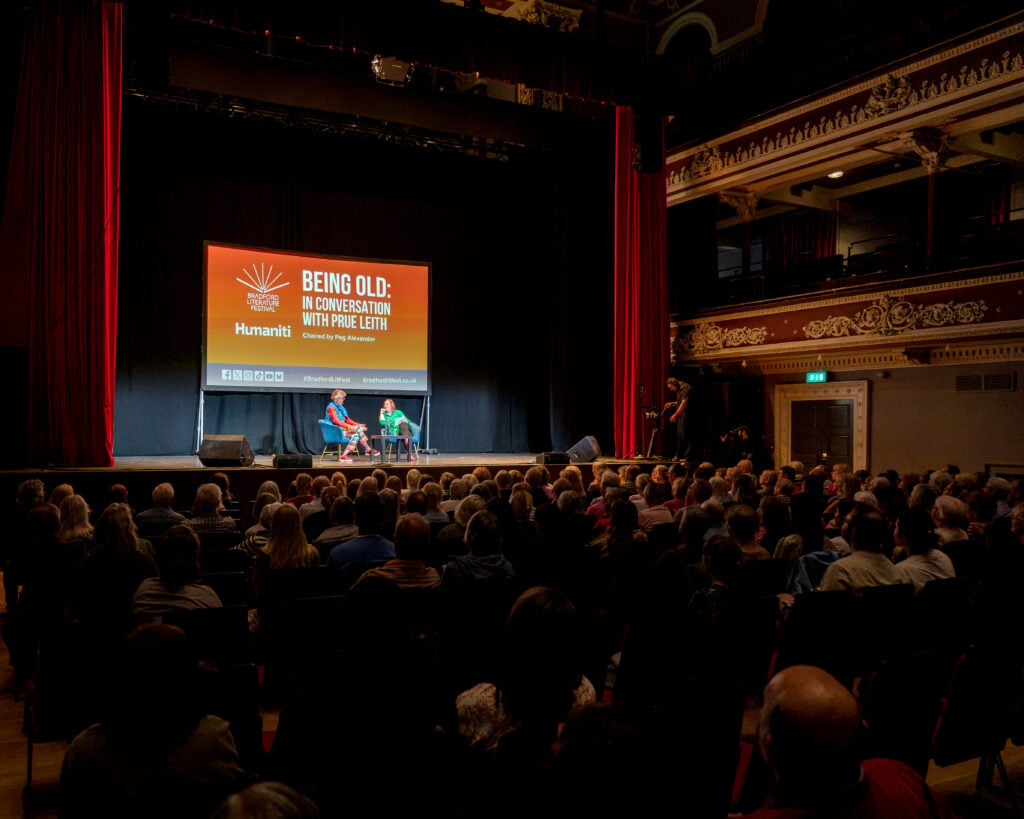
Staying true to the spirit of Bradford Literature Festival, the themes of community collaboration, family, hope, peace and storytelling were echoed throughout headline events with Fatima Bhutto, David Larbi, Prue Leith and Misan Harriman. Lemn Sissay closed the festival on Sunday night with a special event reflecting stories gathered through his ‘Tell Me Something About Family’ project, which was also an exhibition during the festival. In a moving talk, he spoke about ‘the dark and the light of families’, and how we are all unique.
Themes of family and hope were also present in Fatima Bhutto’s sold-out event with Alexandra Pringle, where she discussed how her father’s death at an early age set off a chain of events which led to her intimate memoir, The Hour of the Wolf, a testament to resilience and self-acceptance. Family and the tradition of passing down culture was also echoed in a fascinating, immersive event on the poetry, ritual and oral tradition of Karbala, Iraq, with Dr Ali Naqvi and Owais Hassan, and how it stretches across generations.
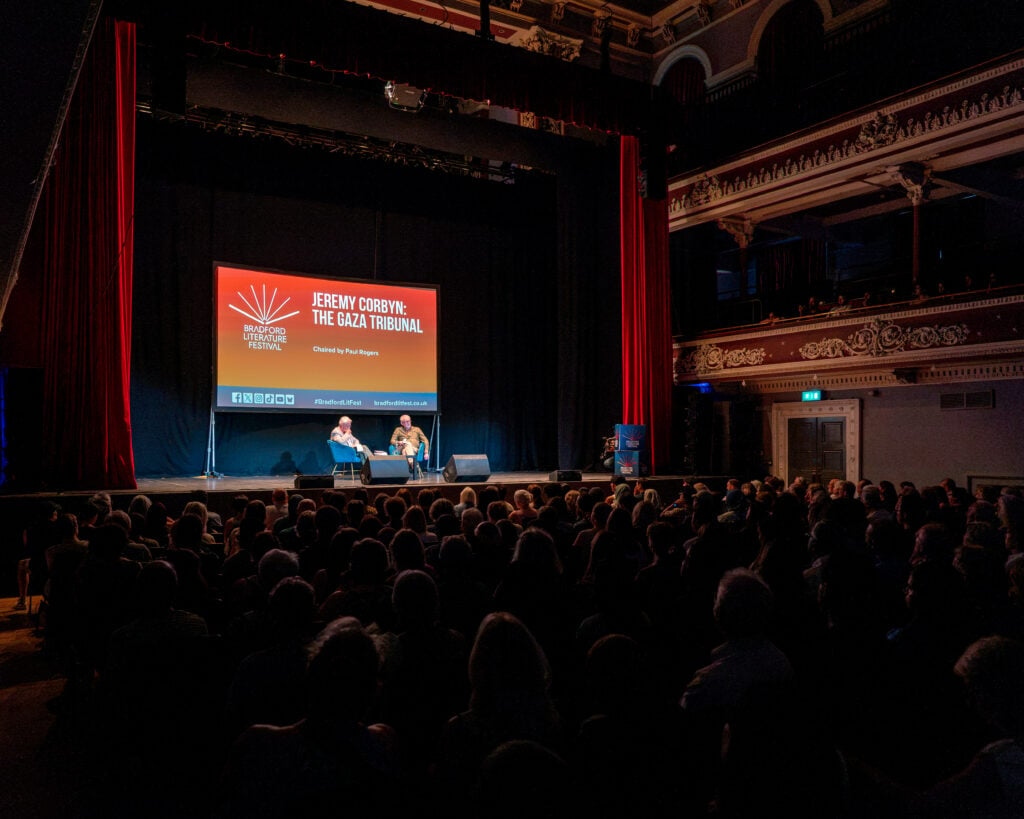
In another highly anticipated, sold-out event, Jeremy Corbyn spoke with Professor Paul Rogers about his new book The Gaza Tribunal Britain’s Complicity in Genocide, and the growing debate around accountability, international law and the humanitarian consequences of conflict. Closing the talk, Cornyn spoke about the importance of Bradford Literature Festival, noting that “solidarity should be cultural as well as political and economic.”
Historians Marc David Baer and Peter Oborne delivered a vital, thought-provoking discussion on Baer’s book Children of Abraham: The Story of Jewish-Muslim Relations. The pair discussed the need for all faiths to come together against the rise of the far-right, highlighting the many historic periods of peaceful cohabitation between faiths.
Alexandra Pringle discussed the importance of empathy with Amy Abdelnoor, whose debut novel Everland is a powerful story about young love and political awakening in Isreal and Palestine, and acknowledged the incredible work that small publishers worldwide are doing to bring different voices to public attention.
The 2026 programme featured a variety of debates and discussions on world affairs and geopolitics, revealing the changing nature of power and conflict in the 21st century. Sheikha Alanoud bint Hamad Al Thani spoke with Professor Paul Rogers and Salman Shaikh about the realities of what happens when a state collapses and infrastructure breaks down, from Gaza and Lebanon to Syria, Sudan and Iran. In a historical talk on how the modern Middle East was shaped through empire, partition and colonial administration, Meshael Al-Mannai, Hassan A. Abdein and Saeed Khan spoke about how previous tensions and competing political visions continue to shape the region today. Vince Cable spoke with Dr Nafja Sabbah Al-Kuwari and Professor Paul Rogers about how different empires have risen and fallen throughout history, exploring the psychology of decline and new contemporary definitions of empire.
Artists Zainab Al Shibani and Wadha Al-Athba exhibited works celebrating storytelling and linguistic performance, with miniature paintings inspired by classical Islamic visual traditions, and Arabic lettering and typography, in a beautifully vibrant show hosted by Bradford Libraries throughout the weekend, in partnership with Qatar National Library. International media platform Doha Debates, founder of the globally acclaimed ‘Town Hall’ events format, produced a series of portal events throughout the festival, which included discussions on AI, the collapse of civilisations over history, and the possibility of intelligent life beyond Earth.
In a nod to the history and heritage of the festival, Dr Rachel King, a curator from The British Museum, spoke about the discovery of a 500 year-old Tudor Heart necklace which is ‘the biggest collaborative project in Britain since the Staffordshire hoard.’ Mark Musolf, acclaimed tour guide at the Brontë Birthplace, led a talk on the newly opened museum in Thornton and their efforts to ensure that the museum has a place in the Brontë and discussed how important this is for the local area: “we are nothing without our history.”
Living with disability was a theme throughout the weekend with Dr Miguel Toribio-Mateas leading a workshop on living with ADHD and giving practical advice for those who have the condition: “learning about your ADHD is the best way to understand how your body processes it.” Poet and author Polly Atkin led a talk on how swimming has helped her live with her chronic illness, giving practical advice to attendees on how sea swimming and speaking candidly about disability and embodiment was an act of attention, continuity and joy.
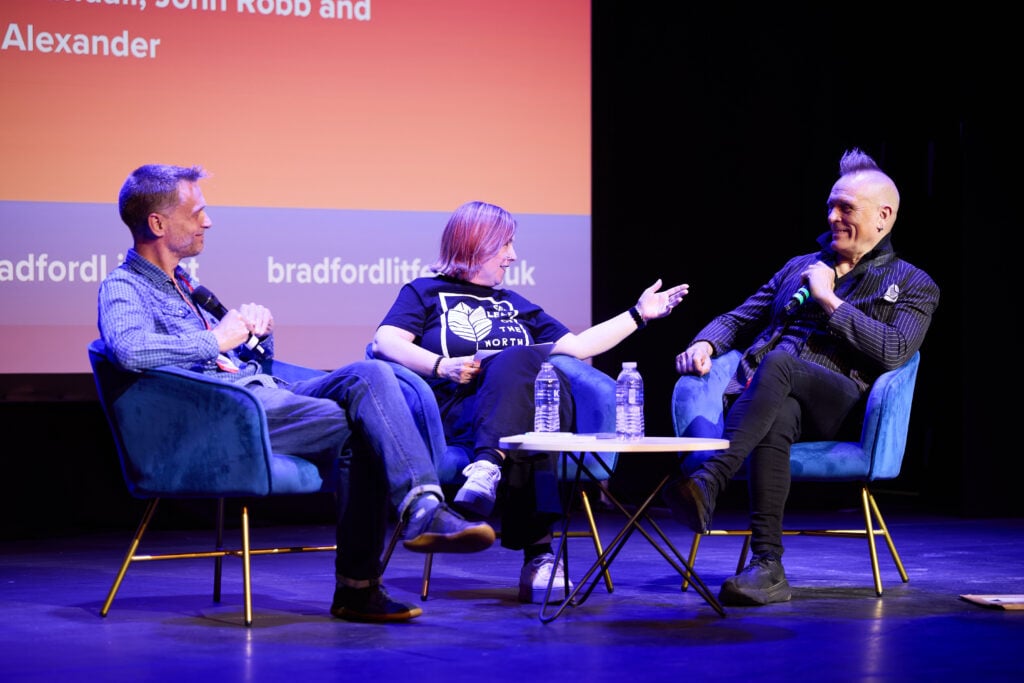
In an inspiring talk on growing up with autism, Heartstopper star Bradley Riches spoke about being non-verbal until the age of 10. It wasn’t until he found the arts, and drama specifically, that he was able to communicate with people, through playing and mimicking characters. Using art to communicate was also key for Guardian critic and author John Harris, who spoke about his son James’ autism and their shared love of music: “It doesn’t feel like a conversation when you’re playing music with someone, it is a conversation. It serves as a language for communicating how you’re feeling.” Using art as a form of communication and expression was a thread throughout the festival, with musicians and writers John Robb and Dave Randall discussing the power of music as a form of protest and collective action, highlighting the success of campaigns such as Rock Against Racism.
Photographer and filmmaker Misan Harriman gave the festival’s annual Free Word Lecture to close the first weekend. Charting the story of his career, starting out as a street photographer documenting the Black Lives Matter movement, Harriman gave a stunningly moving talk on the importance of protest, and the power of photography to present a mirror to truth. Harriman’s new film Shoot the People, a documentary capturing his journey photographing global protest movements, was also screened on Friday night at the National Science and Media Museum.
The relationship between democracy, technology and power featured in many of the festival’s events on geopolitics. Ebrahim Rasool, the Former South African Ambassador to the United States, debated with podcaster and journalist Myriam François in a wide-ranging conversation on the state of democracy in 2026. Expressing concerns over the influence global tech companies have, Rasool argued: “We are living in an age of democracy defined by its lowest common denominator: we have elections, but that’s it.” François echoed Rasool’s concerns, who saw the rise of social media as a political tool a significant turning point in global democracy.
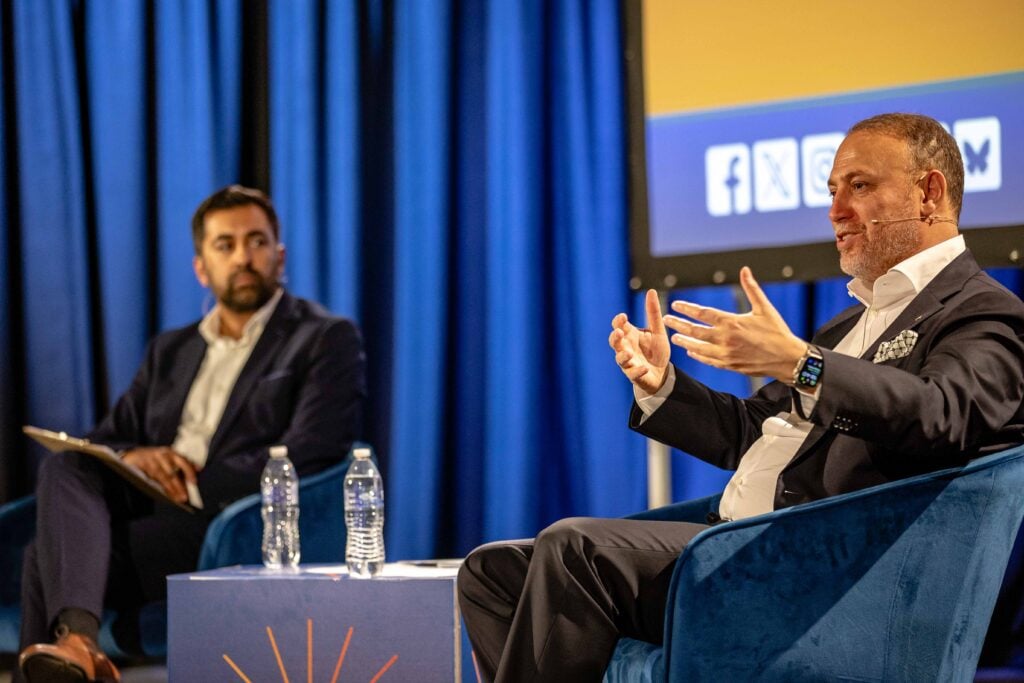
Appearing for a third time at the festival, Husam Zomlot, the Palestinian Ambassador to the UK, opened the festival on the first Friday evening with Humza Yousaf, the former First Minister of Scotland, and spoke about his childhood growing up in a refugee camp. He described it as not only a place of hardship but also “the definition of communal living.” Discussing Sir Keir Starmer’s legacy, Zomlot acknowledged he would “be remembered as the man who recognised the state of Palestine,” but also recognised the reasons behind his resignation.
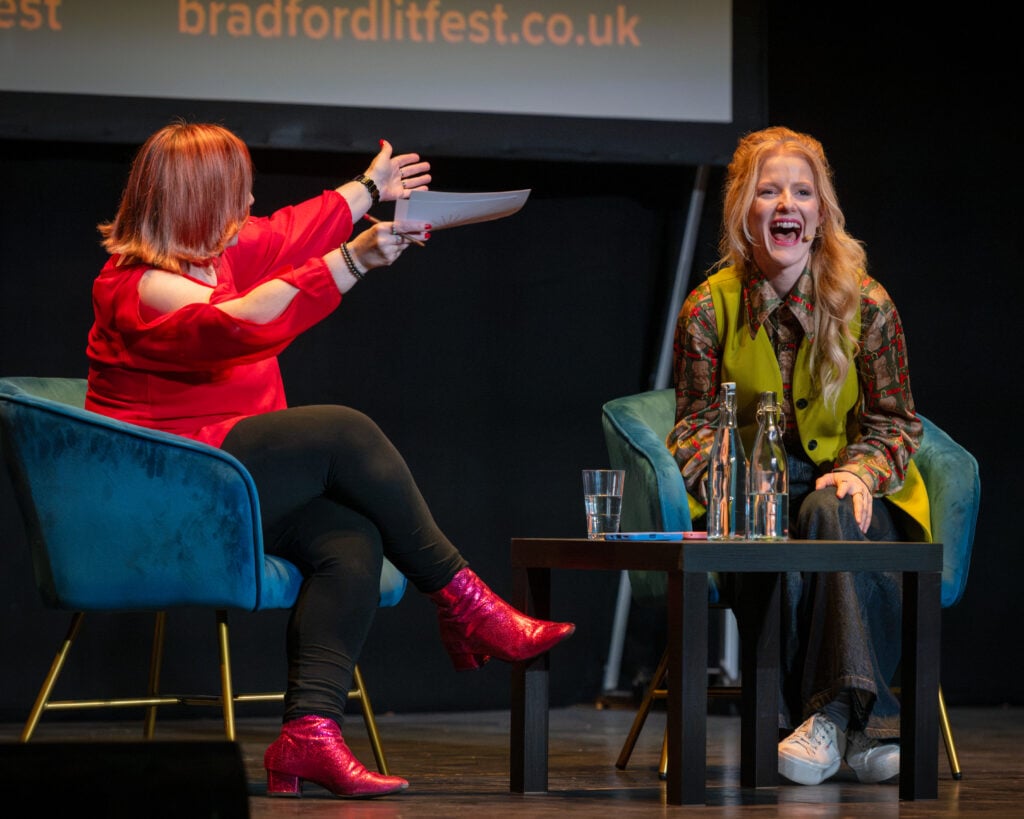
Politics was popular throughout the festival, with Green Party MP Hannah Spencer bringing the house down with a funny and frank conversation about her life in politics to date. Since being elected in February 2026, Spencer has made a point of highlighting out-of-date practices in Parliament. At the festival she spoke out about MPs having separate jobs: “Some ministers have 10 other jobs listed. How can they be serving their constituencies?”
Marking the 250th anniversary of the United States’ Declaration of Independence, authors and academics Saeed Khan, Zahed Amanullah, Nabeela Rasheed and Melissa Butcher explored the origins of modern America and the country’s evolving role within the international order over the past century.
Concerns around online subcultures connected to the ‘manosphere’ were also debated across the festival, with a key event delivered by author Kasim Ali and lecturer Dr Elizabeth Pearson. Ali highlighted the role of global social media companies in the spread of misinformation, outlining how algorithms target young men. Dr Pearson was supportive of the move to ban social media for under 16-year-olds, arguing that although “tech companies need to take responsibility, and yes, we need better role models, we also need to introduce a society-wide ban on social media, as we have done with film and television.” Ali noted that this was also a class issue, and that parents working longer hours on lower incomes have less capacity to monitor their children’s online usage.
There was no shortage of engaging events on literature, with an illuminating lecture inside the mind of William Blake by Mark Vernon, which delved into Blake’s understanding of consciousness, vision and the human spirit. Marking the 50th anniversary of Agatha Christie’s passing, three of UK’s leading crime writers, Janice Hallett, Hazell Ward and Tom Hindle, came together to celebrate the woman who made the whodunnit an art form.
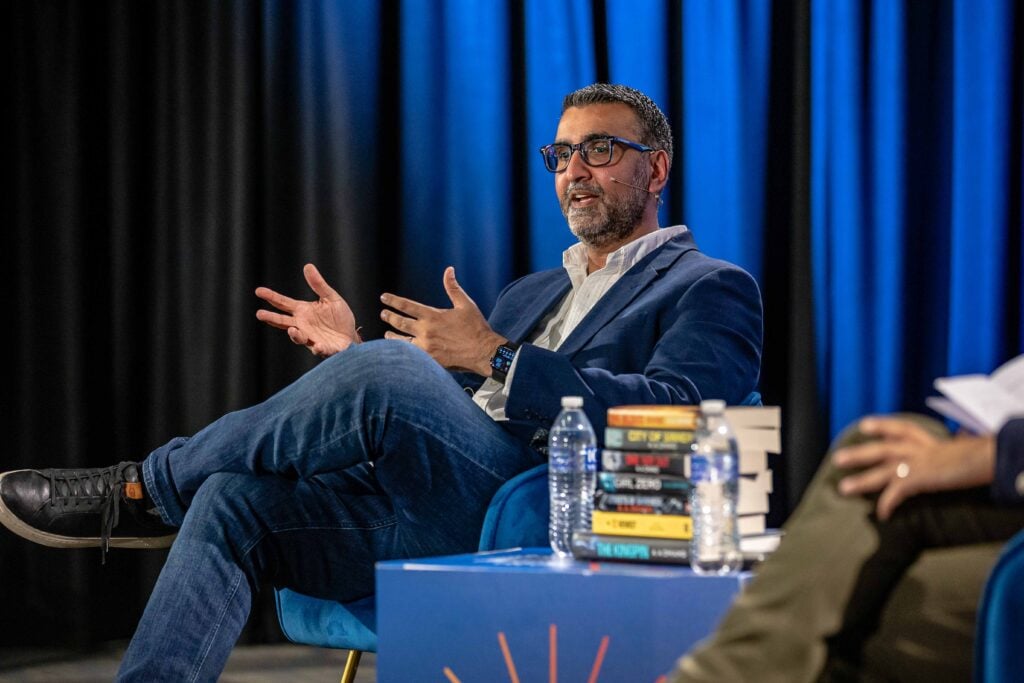
Bradford’s own A.A. Dhand also launched his new crime novel The Kingpin at the festival. The follow up to his Sunday Times bestseller The Chemist, Dhand spoke with fellow crime writer Abir Mukherjee about writing 1.1 million words before being published, and drawing inspiration from his time working as an actual chemist during the Covid-19 pandemic.
Following the success of 2026, the festival has announced that it will take place between Friday 11th June – Sunday 20th June in 2027, with further details to follow.
For updates on the 2027 programme, please visit: www.bradfordlitfest.co.uk